What Does PSI Mean on a Rubber Hose? How to Read Pressure Ratings and Choose the Right Hose
When looking at an industrial rubber hose, you've probably noticed markings such as 150 PSI, 300 PSI, or 600 PSI printed on its surface.
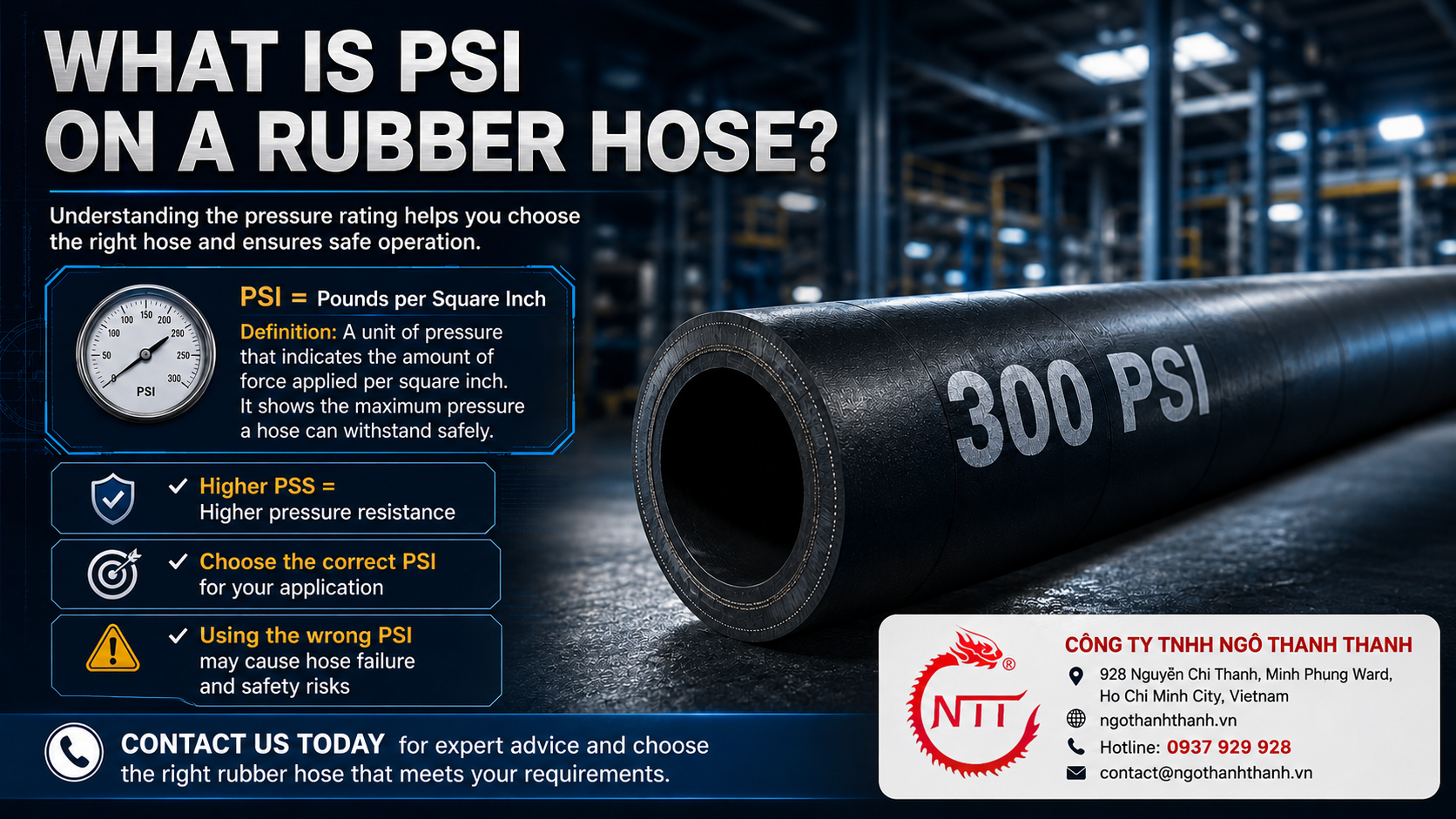
These numbers are not product codes—they indicate the hose's working pressure rating. Understanding this specification is essential for selecting the right hose, ensuring safe operation, and maximizing the lifespan of your industrial system.
In this guide, Công ty TNHH Ngô Thanh Thanh explains what PSI means, how to read hose pressure ratings, and the key factors to consider when choosing the right industrial rubber hose.
What Does PSI Mean on a Rubber Hose?
PSI stands for Pounds per Square Inch, a unit used to measure pressure.
For industrial rubber hoses, the PSI rating indicates:
- The maximum working pressure the hose is designed to withstand under standard operating conditions.
- The hose's safe operating limit.
- A key specification for selecting the appropriate hose for your application.
Example
If a hose is marked 300 PSI, it means the hose is designed to operate continuously at a maximum working pressure of 300 pounds per square inch (PSI).
Why Is the PSI Rating Important?
The PSI rating directly affects the performance, safety, and service life of your hose system.
Higher PSI = Higher Pressure Capacity
Hoses with higher PSI ratings are commonly used in:
- Manufacturing plants
- Compressed air systems
- Hydraulic oil systems
- Mining operations
- Construction projects
- Cement handling
- Heavy industrial applications
However, choosing the highest PSI is not always the best solution. The correct hose should match the actual operating pressure of your system.
Choosing the Right PSI Improves System Performance
Selecting the correct pressure rating helps you:
✔ Maintain stable system performance
✔ Reduce equipment failures
✔ Extend hose and equipment lifespan
✔ Lower maintenance and replacement costs
Using the Wrong PSI Can Create Safety Risks
Operating a hose beyond its pressure rating may lead to:
- Hose swelling
- Rubber cracking
- Fluid leakage
- Coupling failure
- Unexpected production downtime
- Safety hazards for operators
Always verify the hose's PSI rating before installation.
How to Read PSI Markings on a Rubber Hose
Industrial hoses typically display information such as:
- Manufacturer
- Hose diameter
- Production standard
- Fluid application
- Working Pressure (WP)
- PSI rating
- Temperature range
Example
3/4" Water Hose – WP 300 PSI
Where:
- 3/4" = Inside diameter
- Water Hose = Hose application
- WP (Working Pressure) = Continuous operating pressure
- 300 PSI = Maximum designed working pressure
When Should You Choose a Higher PSI Hose?
Not every application requires a high-pressure hose.
Instead, consider these factors:
1. Operating Pressure
The actual working pressure of your system should always be the primary selection criterion.
2. Type of Fluid
Different media require different hose specifications, including:
- Water
- Compressed air
- Oil
- Chemicals
- Cement
- Food-grade products
3. Operating Environment
Also evaluate:
- Temperature
- Humidity
- UV exposure
- Chemical exposure
- Abrasion
- Indoor or outdoor installation
These conditions directly affect hose durability and long-term performance.
Why Consult an Industrial Hose Expert?
Selecting the right hose involves more than pressure alone.
You should also consider:
- Working pressure
- Operating temperature
- Hose diameter
- Hose length
- Transported media
- End fittings
- Technical standards
Choosing the correct hose from the beginning helps reduce maintenance costs, minimize downtime, and improve operational efficiency.
The technical team at Công ty TNHH Ngô Thanh Thanh is ready to help you select the most suitable industrial rubber hose for your specific application.
Conclusion
Understanding what PSI means on a rubber hose is essential when selecting industrial hose solutions.
The PSI rating is more than just a number—it determines whether your hose can operate safely, efficiently, and reliably under real working conditions.
If you're looking for the right industrial rubber hose solution, Công ty TNHH Ngô Thanh Thanh is here to provide professional technical advice tailored to your operating environment.
Contact Information:
NGO THANH THANH CO., LTD
Head Office: 928 Nguyen Chi Thanh Street, Minh Phung Ward, Ho Chi Minh City
Tel: 028-3956-1928 | Fax: 028-3956-1929
Hotline: 0928 88 97 88 | Zalo: 0937 929 928
Email: contact@ngothanhthanh.com
This article is copyrighted by ngothanhthanh.vn. Please provide the source when sharing.